Loading...
Huernia formosa
R45,00
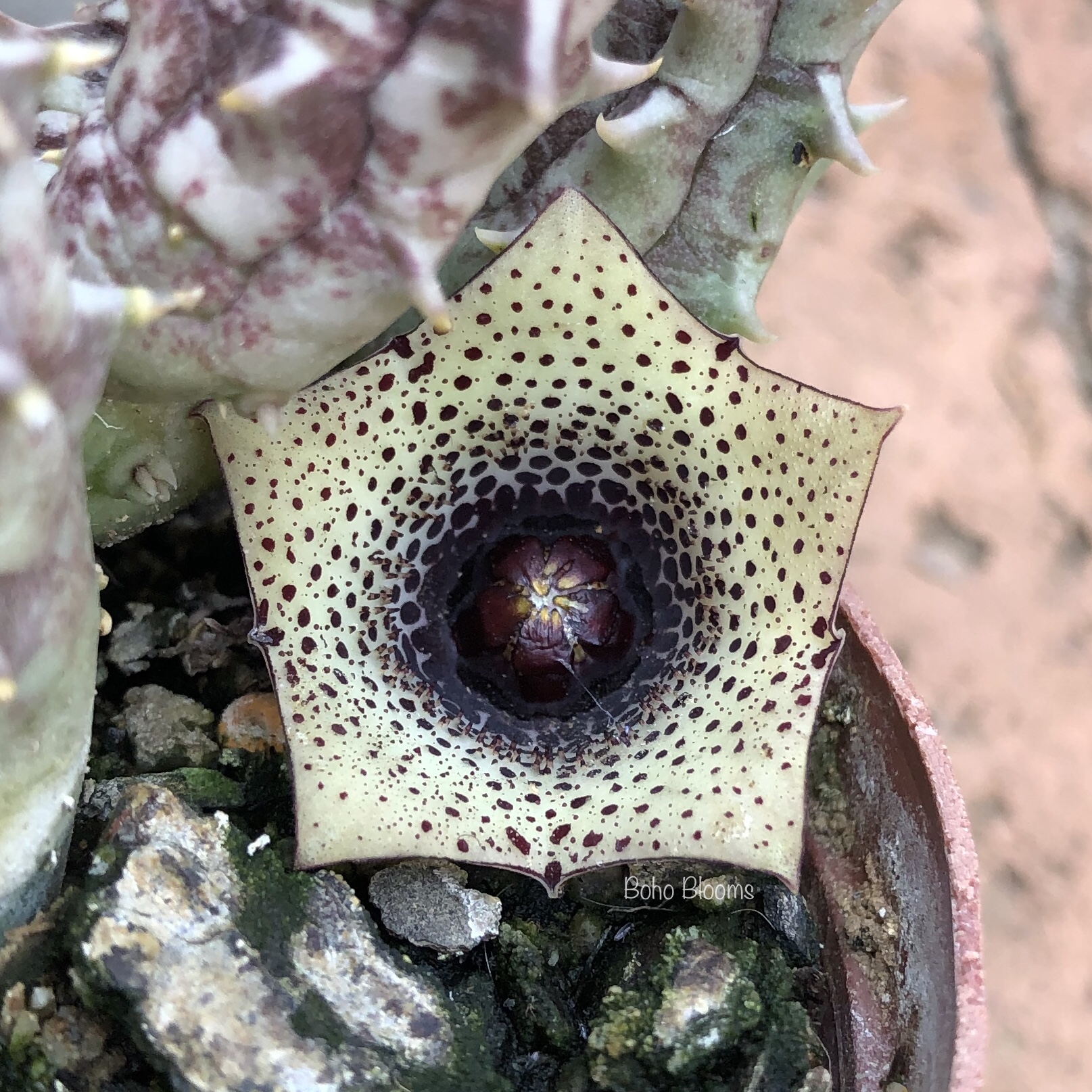
Huernia formosa is a charming desert succulent with architectural stems and striking, star-shaped flowers. The blooms are usually cream or pale ivory with a darker contrasting centre, giving the appearance of an “eye” up close. They add delicate colour and sculptural interest to any succulent collection.
The plant forms low, spreading mats of angular, succulent stems. These stems grow close to the soil surface, are green to grey-green, and show slight tubercle texture. Even without flowers, it has architectural appeal. Its compact habit makes it suitable for pots, rock gardens, or mixed succulent arrangements.
Floral Highlights
• Cream to pale ivory flowers with a darker central “eye”
• Bell-shaped, five-lobed blooms that face outward from the stems
• Fleshy, sculptural texture typical of Huernia flowers
Why We Love This Plant
• Sculptural, low-growing stems with interesting angles
• Elegant cream-coloured blooms with subtle contrast
• Compact habit perfect for pots and succulent collections
• Thrives in bright light and dry conditions
Plant Essentials
• Light: Bright light to full sun
• Water: Sparingly; allow soil to dry completely between watering
• Temperature: Warm, sunny conditions preferred; protect from frost
• Soil: Well-draining succulent or cactus mix
• Growth: Low, spreading stem succulent
• Best for: Pots, rock gardens, and succulent collections
Growing Notes
Huernia formosa thrives in bright light and well-draining soil. It prefers dry conditions and only occasional watering. Water only when the soil is fully dry, especially in cooler months. Avoid overwatering to prevent rot.
Protect from harsh midday sun. Although the plant enjoys bright light, the intense South African midday sun can scorch stems. Morning sun with light afternoon shade is ideal. With the right care, its cream blooms with darker centres provide visual impact and texture in your collection.
Boho Blooms – Interesting Facts & Tips
• Adapted for flies: Many Huernia flowers emit a scent or show contrast to attract pollinating flies
• Flower colour can vary slightly: Depending on light and plant age, blooms appear cream, ivory, or pale yellow
• Stems root where they touch soil: Prostrate stems that contact the substrate can produce roots, allowing slow clump formation
Plants on offer: ±3 stems 4-6cm rooted. Shipped without pot or soil. May or may not currently have flowers/buds.
Image credit: World of Succulents
See our care sheet to find out how you can care for your stapeliads!
Have a look at our other available stapeliads!
1 in stock